Writing
Recursive self-improvement (of Claude Skills)
13 October 2026
And aggregating personal software with RSS
Webmentions
5 October 2026
Inspired by Ben and Russell I have just set up Webmentions on this site.
Same as Ben, I am using brid.gy and webmention.io for the plumbing and have hooked it up to both Bluesky and Mastodon. I think it is working, but if anyone would be kind enough to “like” this post on either platform from the links in the Mentions section below, that would be really helpful.
Glanceable
2 October 2026
Solving read-it-later and watch-it-later with a glanceable podcast feed.
Where to put the emphasis
18 August 2026
Some links on the importance of emphasis.
Simulating geometric Brownian motion
3 August 2026

Geometric Brownian motion is a frequently used modelling tool in finance and economics (especially Ergodicity Economics), but it can be tricky to understand and implement.
Cellularity
2 July 2026

Republishing my speculative video about the emergence of life in the pharmaceutical industry.
Update on publishing an Audiolog
21 June 2026

After 30 episodes, adding some polish to my audio link blog.
How to think about science
11 June 2026
A listening recommendation for learning about science and technology studies.
Quoting Dan Davies
3 June 2026
Britain is the Saudi Arabia of “Other business and professional services”. We dominate the world when it comes to “doing miscellaneous stuff”. Nobody can touch us when it comes to “things that don’t fit in any other category”.
Michael Lewis on the Acquired podcast
30 January 2026
The Acquired podcast recently turned 10 years old and Michael Lewis joined the hosts, Ben Gilbert and David Rosenthal to discuss what makes their show so successful.
Ergodicity Economics Seminars
14 January 2026
Over the last 18 months I have been working with Emilie Soysal to help organise a series of seminars on Ergodicity Economics. All talks from the series so far have been recorded and are available online.
If you would like to be notified when we announce next seminars, then please sign up to the Ergodicity Economics mailing list.
Hollywood style
8 January 2026
I love this article about Kevin Kelly. The author, Brie Wolfson, visited Kelly and talked with him about his career. Kelly calls his way of working “Hollywood style” – producing a series of independent creative projects guided by what is interesting.
Quoting Richard Thaler
11 November 2025
Richard Thaler was recently interviewed on The Economics Show podcast. This exchange stood out to me:
I am quoting it here because its a good encapsulation of how behavioural economics hasn’t really challenged standard economic theory. Instead it validates the standard theory by saying its as good as we are going to get. I disagree with this point of view. There is so much room for improvement.
Integrating Observable Notebook Kit
24 September 2025
I posted about this a few weeks ago, but since that post was shared in the official Observable Newsletter, I thought I would mark the occasion with a post here too.
A few weeks ago, Observable released Notebook Kit - an open-source version of their notebook format. At Fora Health we (meaning Grady) integrated Notebook Kit into our data reporting feature. I made a short demo video that shows the possibilities.
Incomplete Open Cubes
10 September 2025
I got nerdsniped by this video by Paul Dancstep. Its about Sol LeWitt’s Variations of Incomplete Open Cubes.
Failing to reproduce Axelrod, 1980
2 September 2025
Today I learned that a foundational result in game theory hasn’t been successfully reproduced, and not from lack of trying.
Hard Drugs podcast
12 June 2025
I love the Acquired podcast hosted by Ben Gilbert and David Rosenthal. Each episode tells the story of a different company (usually a technology company). The early episodes were about companies that were eventually acquired (hence the name). It goes very deep - episodes are generally several hours long and some companies get 2 to 3 episodes each. Ben and David put a lot of research into their subject and then they record a conversation in which David will tell the story to Ben, who will interject with his own questions, comments and research. This format is great and it works because the hosts have a deep enthusiasm for understanding and sharing the nerdy details of these stories.
Saloni Dattani and Jacob Trefethen have just launched a new podcast, Hard Drugs (supported by Works In Progress and Open Philanthropy. Its a very similar format to Acquired, which is a good thing, but each episode tells the story of a medical innovation. In the first episode Saloni does a great job of telling the story of HIV drug development to Jacob, starting in the early 80s with AZT up to the present day with Lenacapavir. Jacob asks great questions and helps clarify the story. Its fantastically long and detailed and I am here for it.
Creating a collection of fonts
9 June 2025
I want to update the design of this website by customising the typography and styles. There are a lot of very good openly-licensed fonts available which I would like to experiment with and start using. Some recent favourite resources include Velvetyne and this selection by Guy Moorehouse.
What Lives?
27 May 2025
This pre-print collects together 68 definitions of life from various scientists and other thinkers and performs textual analysis on them with LLMs. I read through the individual definitions in the appendices. Here are some that caught my eye:
Publishing an Audiolog
11 May 2025
I really enjoy Russell Davies’ podcast, 4764. He describes it as an audio commonplace – short clips selected from whatever he has been listening to recently, packaged into a weekly podcast. Its a lovely way of listening through someone else’s ears and discovering things that you might not otherwise come across.
Quoting Nate Anderson
19 January 2025
(P.S. If you are chasing something you think you want or need, or are doubting whether you are enough, take a minute and give this a listen. It had a big impact on me at a pivotal time.)
– Nate Anderson signing off and saying thanks at Hindenburg Research.
Visualising LLM evaluation data
7 October 2024
How we visualise the evaluation data for Fora Health’s LLM-powered features.
Expected value dice
26 September 2024
Courtesy of the London Mathematical Laboratory.

Revising the Sagan standard
25 September 2024
What might really lead us to discover aliens is very ordinary evidence and an extraordinary but strong explanation, one that is hard to vary but fits all the evidence and is consistent with our other theories and observations on how reality works. In fact, I think we should revise the Sagan Standard entirely if we are to get to a new paradigm in astrobiology. In this new paradigm, we should be able to concretely talk about the possibilities for alien life in a rigorous, hypothesis driven and testable way. It is not that extraordinary claims require extraordinary evidence as Sagan put it. But instead we need to recognise that extraordinary claims require extraordinary explanations. The actual empirical evidence can be quite simple. What matters is how the evidence is connected to an underlying explanatory framework and how this interconnects to many of our other observations of our physical world. Scientific revolutions and paradigm shifts are driven by new explanations, not necessarily new evidence.
– Sara Imari Walker in Life As No One Knows It (emphasis added).
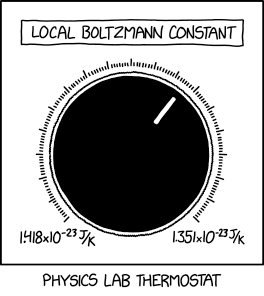
If physics were a synthetic science
25 September 2024
Quoting Julian Gough
23 September 2024
There was a long period of time where the artists extracted the meaning from the data that the scientists provided. I thought that was a very healthy ecosystem. Galvanism […] was witnessed by Mary Shelley […] and then she writes Frankenstein. Frankenstein is the artistic extraction of the meaning from the data of the early electrical experiments. Jules Verne sends men to the moon and invents submarines and does all this stuff, extracting the meaning from a lot of the technological and scientific data around him at the time […]. H. G. Wells was doing the same. […] You had Asimov and Heinlein and Arthur C. Clarke. […] And I think […] as science has got more and more specialized, Writers have retreated from trying to understand science and extract the meaning from it […]. Because it’s hard to follow. It’s really difficult to follow modern science. It’s become a whole bunch of sub-sub-specialties with privatised jargons. […] They really don’t even understand each other. So it’s totally fragmented and there’s no one synthesizing it because all of the most interesting truths tend to come from taking an idea from one field and applying it to another field where it has wonderful application […]. And there’s hardly anyone doing that.
– Julian Gough in conversation with Ben Yeoh.
Importing Readmill highlights into Readwise using jq
12 October 2021
Readmill was a wonderful app for reading ebooks. Unfortunately it was short-lived and shut down after being acquired by Dropbox in 2014. At the time, I was frustrated that my preferred reading platform was being taken away, and I begrudgingly returned to Kindle where I still do most of my reading.